
The DreamBuilder Program
Ready for the house.
Not quite ready for the mortgage.
You have the down payment. You can handle the monthly. It is the credit that is not there yet. DreamBuilder is built for exactly that gap: from 3.5% down, credit requirements that flex with what you put down, and room for self employed, 1099, and ITIN buyers.
You have the down payment saved. You can handle the monthly payment, and you have been proving it for years in rent. It is the credit that is not there yet, and not one of those rent payments counted toward anything you own. The DreamBuilder program is built for exactly that gap. Here is the plain version, the real numbers, and the parts you need to think hard about before you sign anything.
We buy it
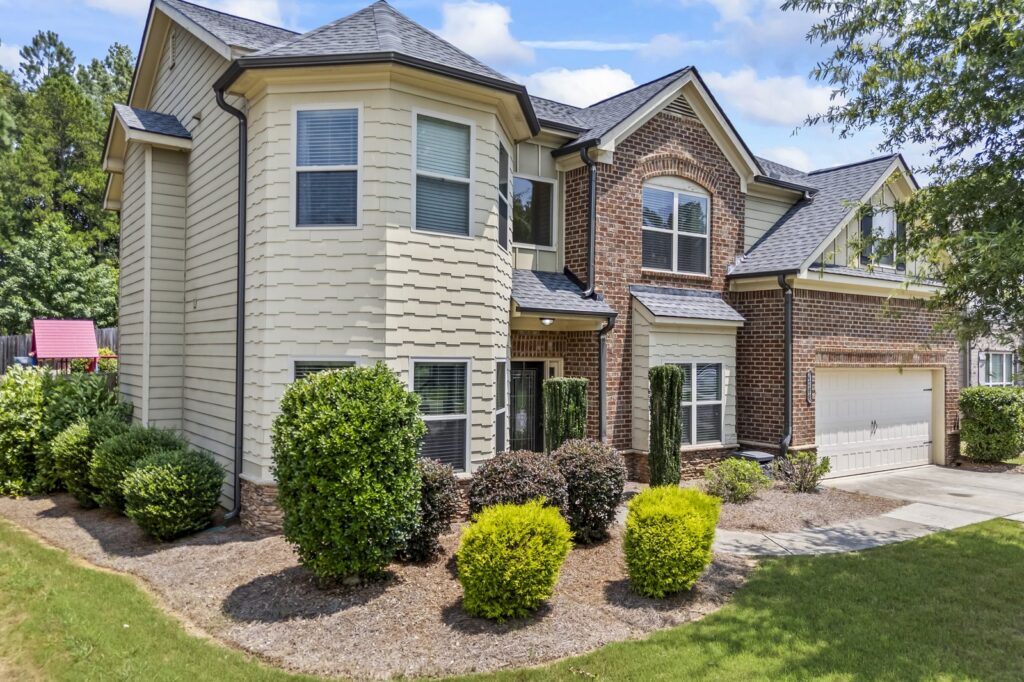
You pick a home on the open market. A tribal governmental agency, the Tule River Homebuyer Earned Equity Agency, buys that home for you and holds the title.
You move in
You put down as little as 3.5 percent and start a 40 year payment plan. You live there as the homeowner would: you maintain it, you insure it, you make it yours.
You build wealth
Every payment knocks down your payoff balance, and you keep 100 percent of any increase in the home’s value while you are in the program.
The one thing to understand up front: this is not a mortgage. It is a leasehold path to ownership. The agency holds title, and you hold a recorded, legally protected right to buy the home outright at any time. When you are ready, you either pay off the balance or assume the agency’s low interest mortgage in your own name.
The order matters, so here it is exactly as it happens.
Before you shop
- 1
Apply and get prequalified
You complete a financial application and we pull a tri merged credit report. You find out what monthly payment you qualify for before you shop.
Finding the house
- 2
Find your home
You choose a qualifying home in your budget and we write the offer. Any home on the market that meets the property rules below is fair game.
- 3
The contract is assigned to the agency
You and the seller sign an assignment addendum that moves the purchase contract to the agency. Your earnest money transfers with it.
Underwriting
- 4
Underwriting and appraisal
The file goes through submission, income review, and a formal lease team review, then gets a conditional approval. An FHA case number is assigned and a full FHA appraisal is ordered. Inspections, termite, and septic checks happen here if they apply.
- 5
Final approval and closing disclosure
Conditions clear, the loan locks, and you receive an initial closing disclosure to e sign within three days. Then the file is cleared to close.
Keys and beyond
- 6
Close and move in
At closing you bring your down payment, the program fees, and your first month’s payment. You sign the Homeownership Agreement, a memorandum is recorded in county land records to protect your rights, and you get the keys.
- 7
Take title whenever you are ready
At any point in the 40 year term, with 30 days written notice, you can buy the home outright at your remaining payoff balance, or assume the agency’s FHA mortgage into your own name.
What would my payment be?
Change the numbers to match the home you have in mind. Estimates only, not a quote or an approval.
3.5% is the minimum. More is allowed.
Set at closing by the market. 6.77% is the working estimate for August 2026.
Gwinnett County averages 0.98%. Georgia statewide averages 0.81%.
Georgia quotes commonly land between $2,000 and $4,100.
Standard FHA closing costs, title, and escrow reserves.
Sellers may credit up to 6% toward your costs.
| What it covers | Per month |
|---|
Cash to get started
What you would owe to own it outright
This is the amount you would pay the agency to take the deed, and it drops with every payment. It does not include any change in the home’s value. Homes can go up in value and they can also go down.
How this is figured: your balance is amortized over 40 years at the rate shown. Mortgage insurance is 0.55% per year and the program servicing fee is 0.50% per year, both figured on the agency’s FHA loan amount, which includes the 1.75% upfront mortgage insurance premium. Program fees at closing are a $1,500 underwriting fee plus a management fee of 0.50% of the purchase price, plus your first month’s payment. Your actual rate, starting balance, taxes, and insurance are set at closing and will differ.
The guidelines are built for people whose income is real but whose paperwork does not fit a bank box.
Credit
- No published score cutoff. Credit requirements move with your down payment: the more you put down, the more room there is on the score.
- Approvals have come through below the usual guideline, so ask before you rule yourself out
- Two tradelines with 24 month history, or 24 months of verified rent
- 12 months of on time housing payments
- Bankruptcy must be discharged; foreclosure or short sale must be at least one year behind you
Income and status
- W-2 wage earners, self employed, and 1099 contractors
- Bank statement, cash flow, and asset based qualification available
- U.S. citizens, green card holders, and non permanent residents including ITIN and DACA holders
- Housing payment up to 50% of income and total debt up to 60%, depending on credit and reserves
Purchase price follows the FHA loan limit for the county. In 2026 that is $718,750 in Gwinnett and Forsyth, and $541,287 in Hall and most of Georgia.
Eligible
- Single family, attached or detached
- Two unit properties
- Townhomes and PUDs
- FHA approved condos
- Multi wide manufactured and modular homes
Not eligible
- Three and four unit properties
- Condos with spot approval only
- Co-ops
- Mobile homes
- Single wide manufactured homes
The home has to be in solid shape. Condition ratings C1 through C4 pass. A C5 has to be repaired up to C4 before closing. A licensed inspection is required for any home built in 1978 or earlier. The roof needs at least 10 years of useful life, septic must have been serviced within the last year, and a home warranty covering major systems is required.
This is the part worth reading twice. The upside is real and so are the tradeoffs.
| Traditional mortgage | DreamBuilder | |
|---|---|---|
| Who holds title | You do, at closing | The agency, until you buy it or assume the loan |
| Your legal interest | Fee simple ownership | A leasehold estate, recorded publicly to protect your purchase right |
| Payment schedule | Usually 30 years | Amortized over 40 years, which lowers the monthly payment |
| Appreciation | 100% yours | 100% yours during the term |
| Renting it out | Allowed in most cases | Not allowed at all, not even temporarily |
| If you fall behind | Foreclosure process | You can lose the purchase option and be evicted |
Be clear eyed about this: failure to make your monthly payments or to follow the Homeownership Agreement can result in losing the purchase option and being evicted. You cannot lease, sublet, or finance the home, even temporarily. A delayed closing or delayed move in can result in the failure to purchase the property and revocation of the agreement. And there is no guarantee that homes go up in value. They can also go down.
There are two doors, and you choose the timing on both.
- Buy it outright. Give 30 days written notice and pay the payoff amount on your amortization schedule plus anything outstanding. The agency clears the underlying mortgage and delivers a special warranty deed to you.
- Assume the mortgage. Give 30 days written notice to the agency and the lender. You need to be current and in good standing, pay the lender’s assumption costs, and cover the difference between your 40 year payoff balance and the remaining balance on the underlying 30 year FHA loan. The lease ends, the deed transfers, and the loan becomes yours.
Why the balance goes down faster than rent ever could: every monthly payment works like a 40 year amortizing loan payment. A slice of each one reduces the price you would pay to own the home outright. That is the earned equity piece, and it is the whole point of the program.
Is this the right move for you?
The honest answer depends on your credit, your income documentation, and how long you plan to stay. That is a 15 minute conversation, not a form. Call or text me and we will look at your actual numbers.
Jennifer K. Lewis, REALTOR®, serving Buford, Sugar Hill, Suwanee, Flowery Branch, Braselton, Cumming, and the surrounding Gwinnett, Forsyth, and Hall County communities.
Required disclosures
Not a mortgage loan. The DreamBuilder Program is not a traditional mortgage loan, but is a leasehold and shared ownership path to homeownership. The Program has terms, conditions, and rights that differ significantly from a traditional residential mortgage and fee simple ownership.
Forfeiture and eviction risk. Failure to make monthly payments or comply with the Homeownership Agreement terms can result in the loss of the purchase option and eviction.
No subletting or leasing. Homebuyers are strictly restricted from leasing, subletting, or financing the Home, even for temporary uses.
Delayed closing. Delayed closing or occupancy of the property may result in the failure to purchase the property and the revocation of the Homebuyer Agreement.
No appreciation guarantee. There is no guarantee that homes will go up in value; they can also go down in value.
All payment figures on this page are estimates for illustration only. They are not a loan estimate, a commitment to lend, an approval, or an offer of credit. Actual rate, payment, taxes, insurance, fees, and eligibility are determined at application and closing.
Open Mortgage Wholesale is a DBA of GenWay Home Mortgage, Inc. NMLS # 222730. www.nmlsconsumeraccess.org.
Equal Housing Opportunity. We do business in accordance with the Federal Fair Housing Law and the Equal Credit Opportunity Act.